Personal
Information
Sheet
Name: George Edmond Wilkinson
DOB: 14th December 1913
Rank: Private (Bandsman)
Service Identity Number: 3054222
Service/Regiment/Corp: Royal Scots
Unit: 2nd Battalion
Died: 2nd November 1989
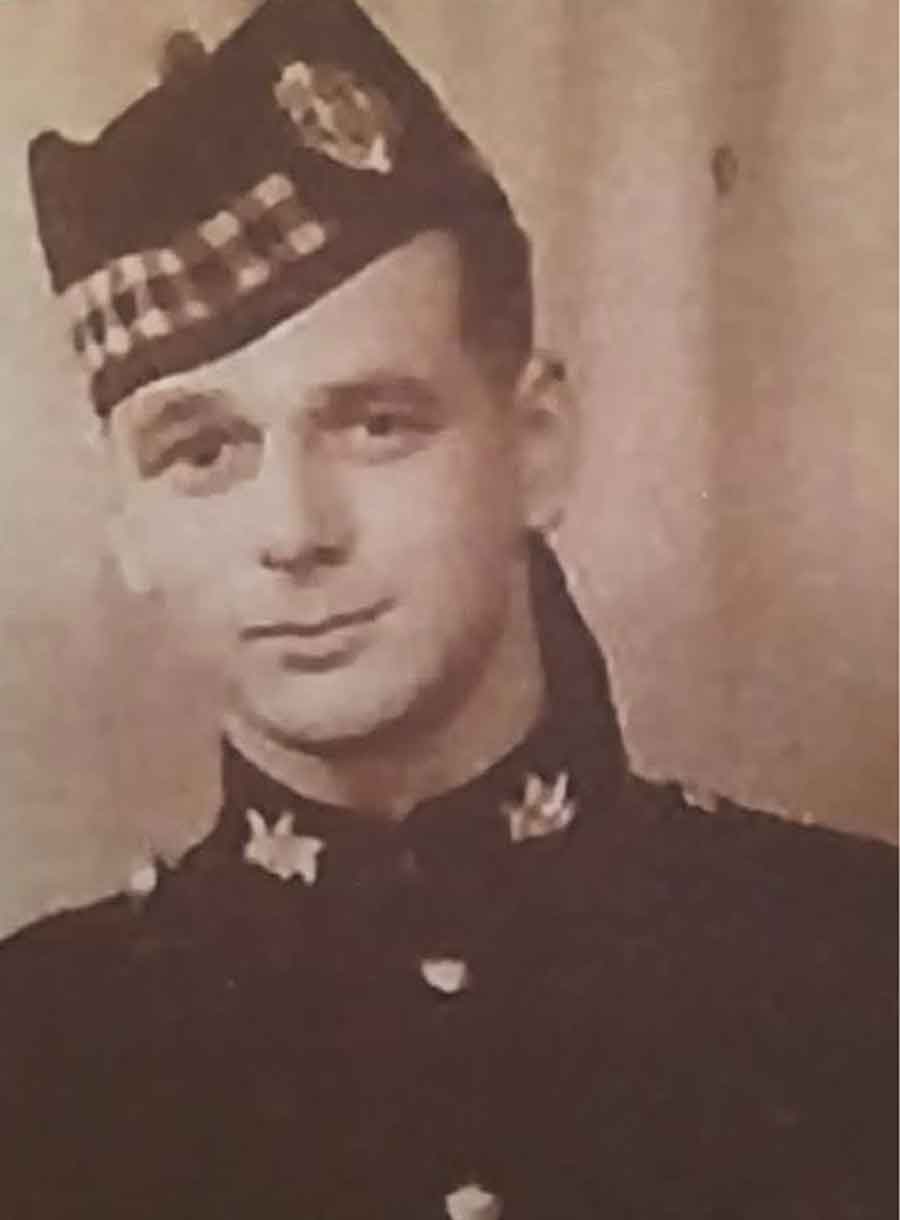
Click image to expand and see all images
George was born in Bridlington, Yorkshire but moved to South Bank, Middlesbrough during WW1 to live with his grandparents. He attended the local elementary school in Cromwell Road. It was the time of the Great Depression (a period of extreme poverty) there was no work for the men except for the fortunate few who had jobs in the shipyards. He and other children begged for scraps as those men finished their shifts.
During this time he joined the Salvation Army's Boys Band and learned to play a cornet. Later he played the trombone in The South Bank Silver Prize Band. George left school at 14 years old and went to work in Smith's Dockyard and later at a brickyard. At 20 years of age he was working 13 hours a night seven nights a week as a night burner for three shillings and sixpence.
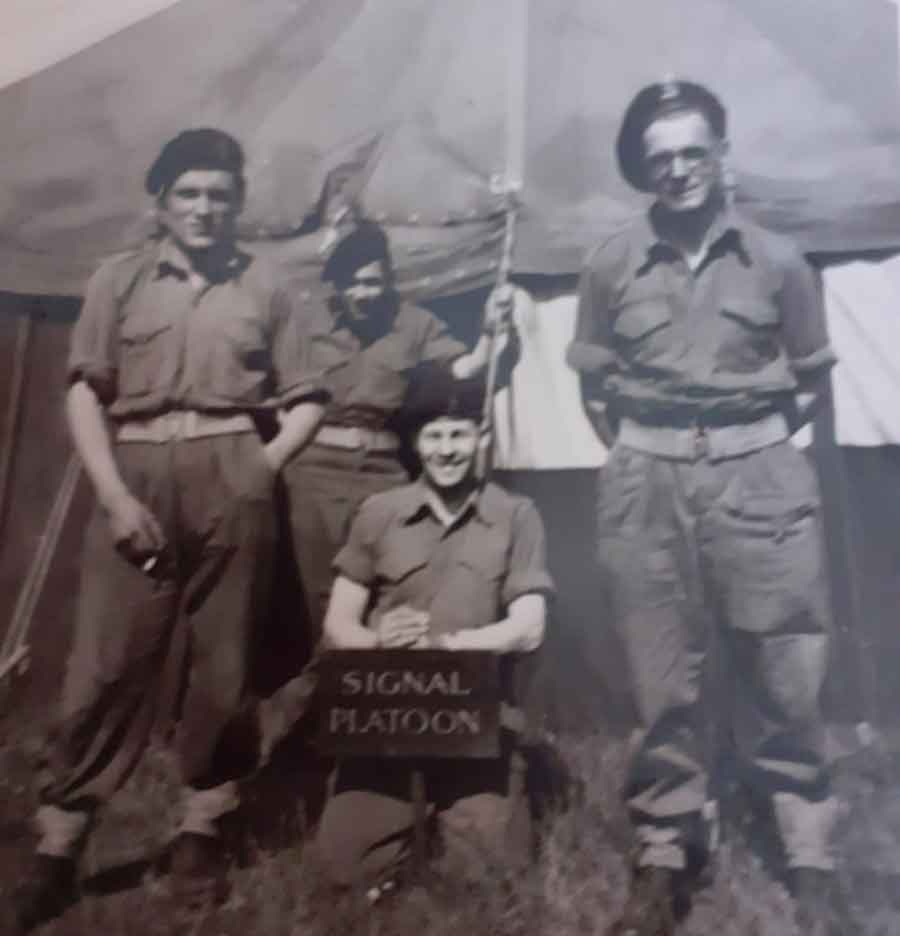
In August 1934 he decided to join the Army and instead of going home after a night shift he made his way to Middlesbrough Recruiting Office to enlist into the Band of the Royal Scots Regiment. George would travel thousands of miles during his time in the military, from Edinburgh to Dover and then to India, China, Japan, the Philippines, America, Canada and finally back to Southampton Docks after 9yrs and three days overseas circumnavigating the world.
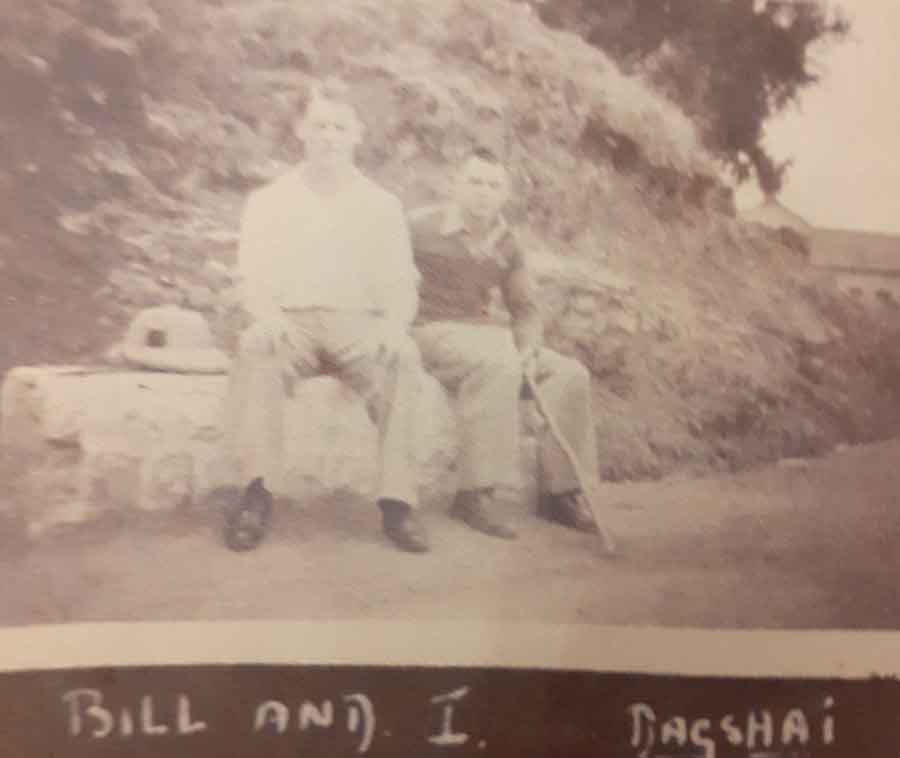
In 1936 George was posted to Lahore India (now Pakistan). He travelled from Southampton aboard the troopship H.M.S Dorsetshire. In May 1937 the Royal Scots moved to the hill station of Dagshai where they stayed for three months. In September of that year they moved back to Lahore In 1938 The Royal Scots left Lahore for a new posting in Hong Kong. Arriving there in February to defend the colony and after travelling through many countries witnessing the aftermath of the Rape of Nanking they knew how brutal the Japanese could be should they encounter the might of the Japanese Imperial Army.
When Britain went to war with Germany the Royal Scots were engaged in passive defence. In November 1941 they were joined by two Canadian Battalions (these were conscripts and very young). They were to take over duties of the Royal Scots and the Middlesex Regiment who were to be sent to the western desert the following February. Less than a month later on the 8th December 1941, the Japanese attacked the colony with Zero fighters and bombers. Opposing the ill equipped defenders of the colony were the 38th division of the Imperial Japanese Army consisting of 30,000 men.
The Royal Scots defending a ten mile stretch of Gin Drinkers Bay had 600 men, five machine guns and disused pill boxes. Churchill had said the redoubt would stop anything! Hand to hand and bare fists were used as the Japanese advanced and bitter fighting ensued, unable to hold their position on Golden Hill because they had run out of ammunition, with no other options the Commanding Officer ordered the Artillery to shell the advancing Army and as a result many lives were lost. On the 14th December positions were taken up at the harbour front but had to move inland because of the shelling.
On the 23rd December the Japanese launched a heavy mortar attack and George was wounded in his arm and his shoulder. He was taken from the field hospital by truck to the Queen Mary Hospital and as he left the field hospital by the back door, the Japanese entered and massacred everyone (an incident too grim to recount). On Christmas Eve he was operated on and at 9pm Xmas Day, Hong Kong surrendered.
On the 26th January he was moved to Bowen Hospital which was under the control of the Japanese and was there until June 1942 when he was transferred to Shamshipo Camp which he described as pure hell. Grouped in threes, if one tried to escape the other two would be shot. There was a diphtheria epidemic with ten men dying a week. The sinking of the Lisbon Maru finally brought the disease to a halt.
On 22nd September a draft of 1816 British POWs boarded the SS Lisbon Maru, packed into three holds The Royal Scots and the Middlesex were in no 2 Hold, The Royal Navy in No.1 and the Royal Artillery in no 3. Tightly packed in and with disease rife they took turns to lie down. Also on board were 2000 Japanese returning to their homeland.
90 miles South East of Shanghai on the 1st October the Lisbon Maru was torpedoed by an American Submarine, The prisoners in the holds were battened down by their captors and the next day the ship sank stern first. No 2 hold were able to break out but those in No 3 hold unfortunately perished including two lads George knew from his hometown. George, who couldn't swim, jumped into the sea, clinging to a piece of floating wreckage for several hours and ducking to avoid being machine gunned by the Japanese. His lungs filled with oil from the sinking ship and dead bodies were floating by. He was eventually picked up by a Japanese Navy Patrol ship.
Eventually landing in Shanghai those left were told the intention was that all of them should have gone down with the Lisbon Maru! At the final roll call 970 answered and 846 failed to answer, All but six of these men had lost their lives at sea, the missing six, it was learned later had managed to escape with the help of the Chinese.
Leaving Shanghai on the Shinsei Maru, the POWs arrived in Osaka on the 10th October 1942. The voyage was via Moji on the north side of the southern island of Kyusha then the inland sea. There were 1444 British POWs in camps in the Osaka area and George's number was 553. George was in No 1 Camp of the dock area at the steel works in Netetsu Mitsubishi, unloading ships, making tank tracks and sabotaging them at the same time, there were lots of beatings and their only food was a bowl of rice or thin watery stew.
In July 1943 there were 11 earthquakes within two weeks followed by a tidal wave and luckily there were no casualties. In March 1945 the Allies bombed Osaka, in one day half of the city was destroyed and many POWs lost their lives. At the end of May one hundred POWS were sent to Natagowa (a punishment camp for trouble makers). The job was to reclaim land and plant rice on the shores of Lake Biwa. In the end 400 British, Dutch and American prisoners were to benefit from it. A week later Osaka was bombed and razed to the ground and most of the POWs that were left there perished.
On the 15th August 1945 it was all over. There was no outward sign of rejoicing, just men walking around as if in a dream and some just sat on the edge of the lake staring into space whilst others who had survived against all odds killed themselves by eating until their stomachs burst.
He was liberated from Natagowa and he along with two others made their way to Kobe. They then joined others and went to Yokohama, Okinawa, Manilla to Seattle, Vancouver Island through Canada to Halifax where he boarded the Ile de France finally returning to England.
George married Winifred who had been in the ATS and whose home was in Norfolk. He joined the Territorial Army in Norwich and worked for the GPO. He was also a Scout leader around the same time. He had many interests but his main love was music particularly military bands and he played in local silver bands despite having had tuberculosis in his forties. His other passion was gardening.
After Winifred passed away in 1987 he applied to become a Chelsea Pensioner and was due to move to Chelsea on the thirteenth of November 1989 but unfortunately passed away on the second of that month. He was buried with the only item that he managed to keep through captivity, a tiny water damaged Bible!
In spite of all that he had suffered, he did enjoy life as best as he could. The trauma and nightmares were a constant reminder, Christmas was always a difficult time! He was a respected member of the local FEPOW community and most of all, to his two daughters a very special father and grandfather.
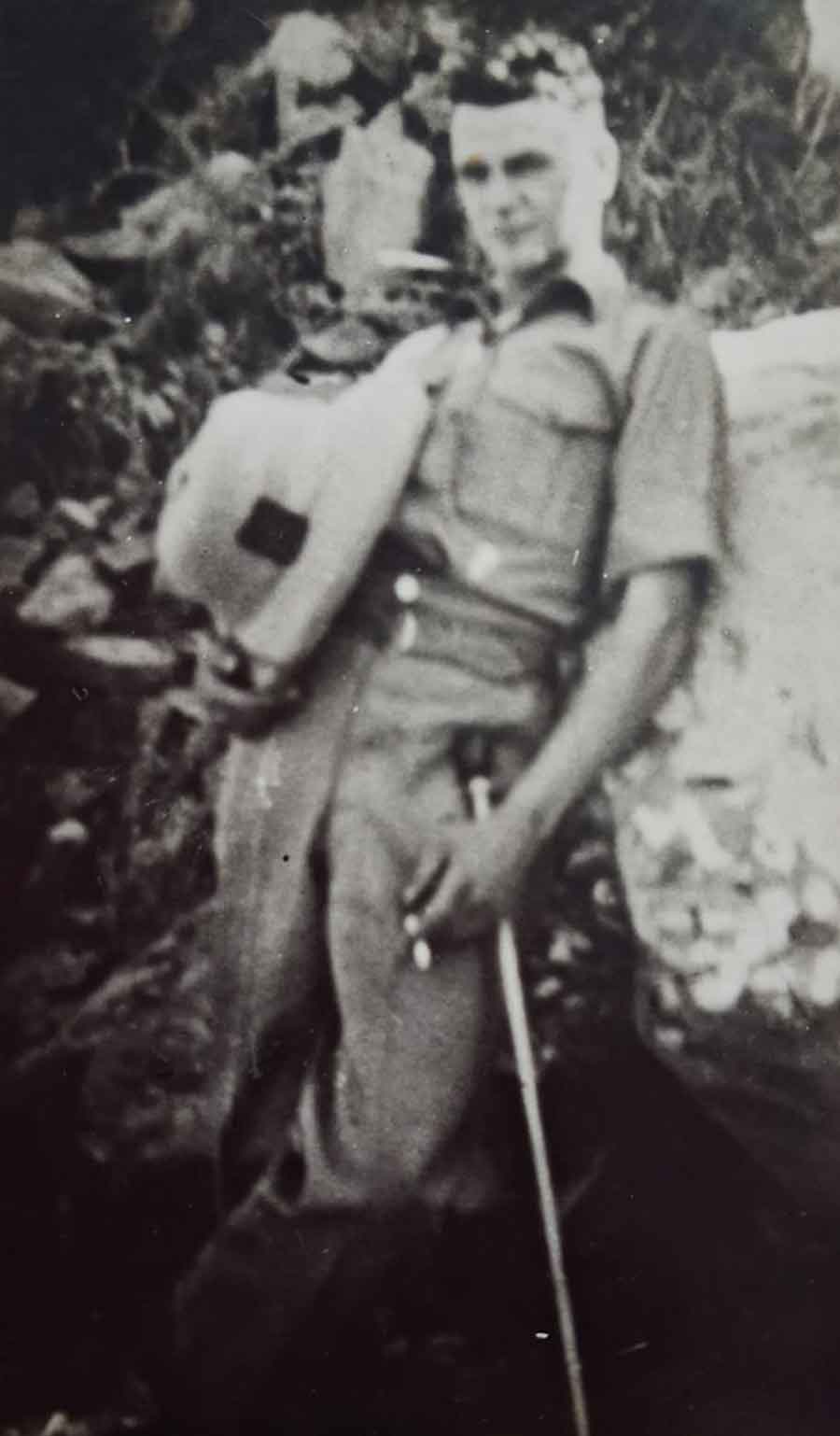
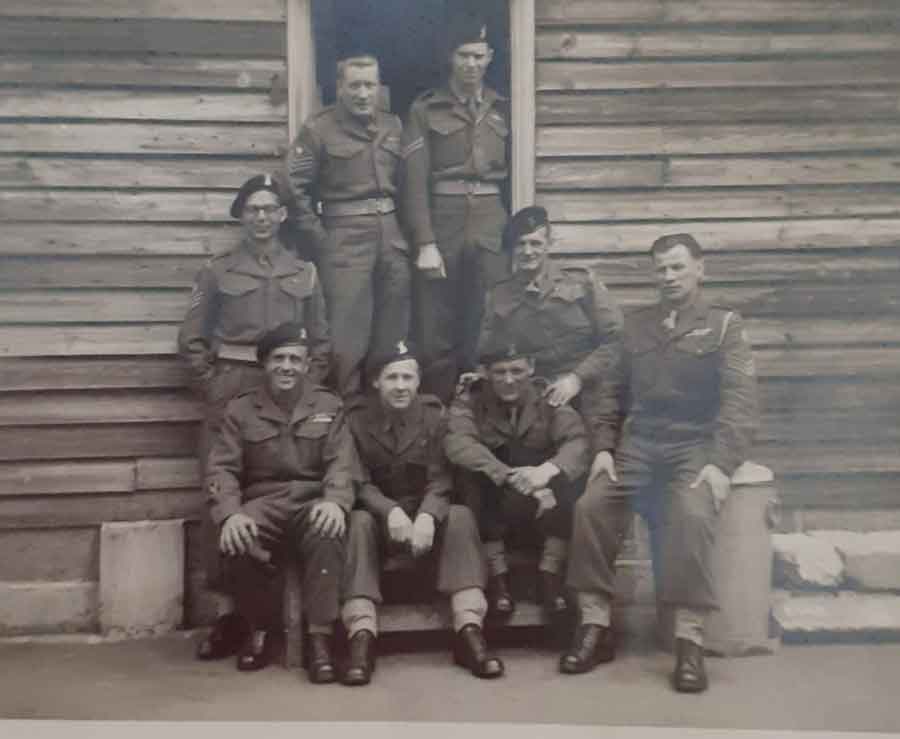

The above information was provided by Barbara Stagg & Linda Mapp daughters of George Edmond Wilkinson.
Reproduction of this Personal Information Sheet or the information or pictures contained within it without the express permission of LiMMA is prohibited. Relatives providing information regarding the above person do so on the understanding that it will only be used for the purposes of LiMMA in producing their website and not passed to any third party. For further information please contact limmauk@gmail.com